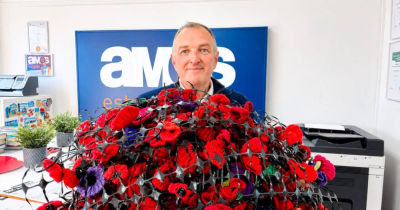
Helping to fund a new defibrillator in Hockley
We were delighted to welcome our friends from Hockley & Hawkwell Methodist Church on Saturday to use our community stall for a fundraising project to buy a life saving defibrillator for Hockley.

The guys from Hockley & Hawkwell Methodist Church made use of our community stall and was blessed with good weather to raise over £400 towards the purchase of a defibrillator by hosting a pop-up market stall selling various items.
Here is some information on why defibrillators are such a vital piece of equipment to keep our community safe.
A defibrillator is a device that gives a high energy electric shock to the heart of someone who is in cardiac arrest. This high energy shock is called defibrillation, and it's an essential part in trying to save the life of someone who’s in cardiac arrest. A defibrillator may also be called a defib, an AED (Automated External Defibrillator) or a PAD (Public Access Defibrillator).
How to use a defibrillator
If you're on your own, don't interrupt CPR to go and find a defibrillator. If it's possible, send someone else to find one. When you call 999, the operator can tell you if there's a public access defibrillator nearby.
To use a defibrillator, follow these simple steps:
Step 1: Turn the defibrillator on by pressing the green button and follow its instructions.
Step 2: Peel off the sticky pads and attach them to the patient’s skin, one on each side of the chest, as shown in the picture on the defibrillator.
Step 3: Once the pads have been attached, stop CPR and don’t touch the patient. The defibrillator will then check the patient’s heart rhythm.
Step 4: The defibrillator will decide whether a shock is needed and if so, it will tell you to press the shock button. An automatic defibrillator will shock the patient without prompt. Don’t touch the patient while they are being shocked.
Step 5: The defibrillator will tell you when the shock has been delivered and whether you need to continue CPR.
Step 6: Continue with chest compressions until the patient shows signs of life or the defibrillator tells you to stop so it can analyse the heartbeat again.
Anyone can use a defibrillator and you don’t need training. Once you turn it on, it will give clear instructions on how to attach the defibrillator pads. The device checks the heart rhythm and will only tell you to shock if it’s needed. You can't shock someone accidentally.